

In ancient Rome, augury was the major kind of divination. This included watching the sky, thunder and lightning, but most importantly the auspices, watching the birds. Eagles and vultures were Jupiter’s most important messengers.
Nothing was decided without consulting an augur, a priest who could interpret the flight, the song and dance of birds. Most notoriously, Romulus and Remus settled their dispute on where to found the city of Rome by an augury. Romulus, of course, had the better auspices. He spotted more vultures than his brother Remus, which also granted the former the right to fratricide.

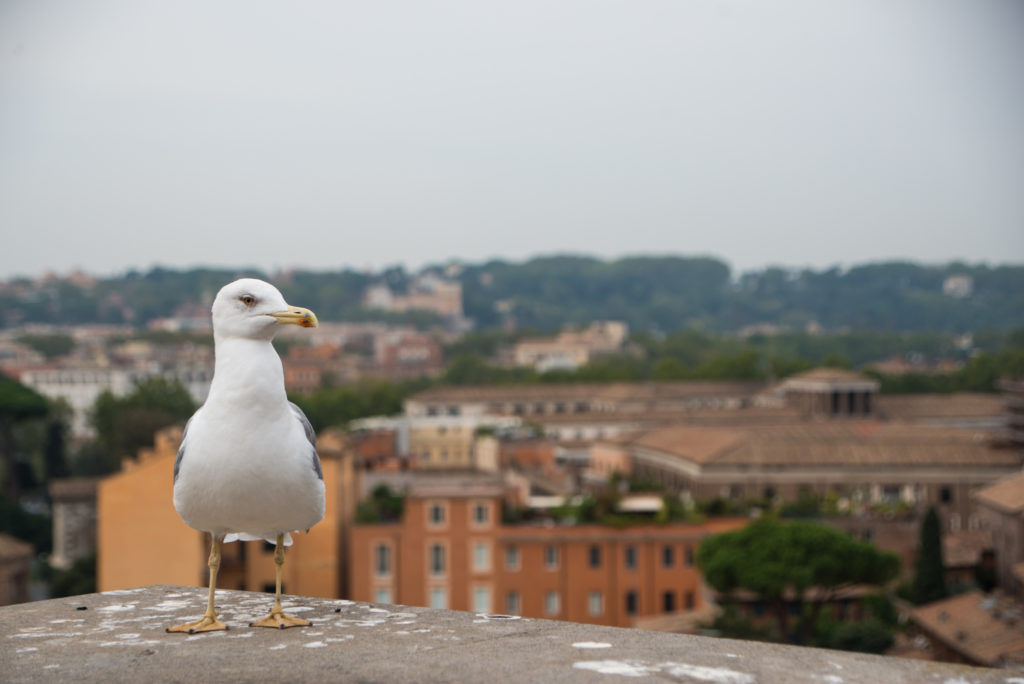
The auspices was restricted to certain species, which are hard to come across in the busy city nowadays. Like in any other coastal city, giant gulls and pigeons seem to outnumber the rest of Rome’s avian population.
Since the Roman Empire extended over a vast part of Northern Africa, tropical birds were imported as sought-after pets. Emperor Nero famously owned an African Gray parrot, Pontius Pilatus’ wife, Claudia, kept lovebirds in a cage, who looked not unlike the Monaco Parakeet.

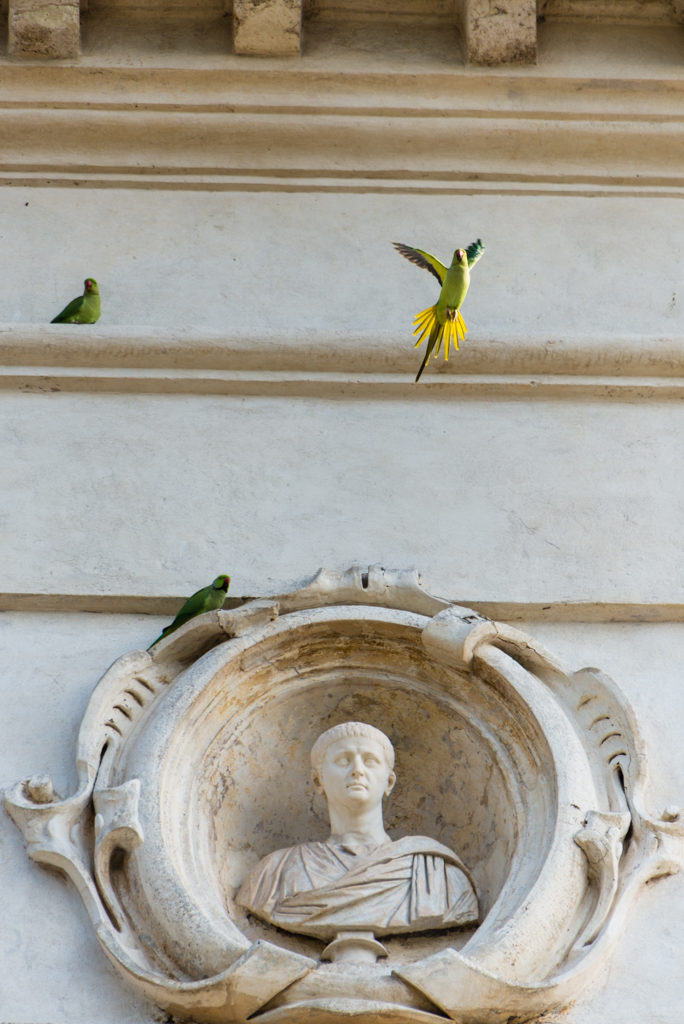
Today’s most flamboyant Roman bird, the gregarious Monaco Parakeet, only arrived in Rome in the early 1970ies. The striking, green parrots have since seamlessly integrated into Italian lifestyle, not causing any harm to local Wildlife, according to the Italian Wildlife Fund. These bright flying jewels color the ancient buildings, which, when built, where not as marble-white, but painted in manifold colors.